Pixal 3D  ·  Seed Round Investment Brief  ·  2025

Canada's First Commercial
Hyperspectral AI for
Municipal Crop Disease
Detection

The first commercial deployment of hyperspectral AI in Canadian municipal agriculture — presymptomatic disease diagnostics delivered to Alberta's mandated Agricultural Service Boards, farmers, and agronomy partners. Flight data becomes field-specific prescription maps before visible symptoms appear.

$1.58M
Seed Round
$980K
2028 Run-Rate
100%
Clubroot Detection Rate
14,000+
Addressable AB Farmers
Calgary, Alberta  ·  Canada  ·  pixal3d.com
01

A Diagnostic Gap in Global
Agriculture

The tools growers rely on today can detect that a plant is stressed, but not why. Disease, drought, nutrients, and insects look identical on an NDVI map — and by the time symptoms are visible to the eye, physiological damage has already occurred and pathogens have spread beyond the treatment window. Across every major growing region, the result is the same: producers manage losses instead of preventing them.

I
Visual Scouting

Manual scouting covers a fraction of total acreage and only detects disease after visible symptom expression — when yield damage has already begun. A scout walking 1,200 acres cannot provide field-wide coverage.

Detects damage after the fact
II
Lab Diagnostics

Accurate — but at $50–$150 per sample, cost-prohibitive for field-wide application. Results arrive on a multi-day lag, too slow to inform within-season management decisions at scale.

$50–$150 per sample · days of lag
III
NDVI / Standard Imagery

Standard drone and satellite imagery detects that a plant is stressed — but cannot identify why. Disease, drought, nutrients, insects all look identical. Critically, NDVI only flags stress after physiological damage is already underway.

Symptom without diagnosis
$220B

Annual global economic loss from plant diseases alone — the direct cost of the diagnostic gap Pixal 3D is closing.

02

The Missing Diagnostic Layer
for Field Operations

Building a
Spectral Disease Library

Pixal 3D combines drone-mounted hyperspectral imaging, agronomic ground truthing, and machine learning to convert spectral signatures into disease-specific maps. The result is not another stress image. It is a decision layer for municipalities, agronomists, and growers.

Pixal 3D will perform drone based hyperspectral imaging over a field of interest.

The collected hyperspectral dataset is fed through our ML to detect clubroot. Our model can classify crops infected with clubroot with a 93% accuracy rate.

With a detailed field wide map of where disease pressures exist:

  1. Farmers can apply the exact treatment needed.
  2. Municipalities can more effectively manage the spread of diseases in their borders.
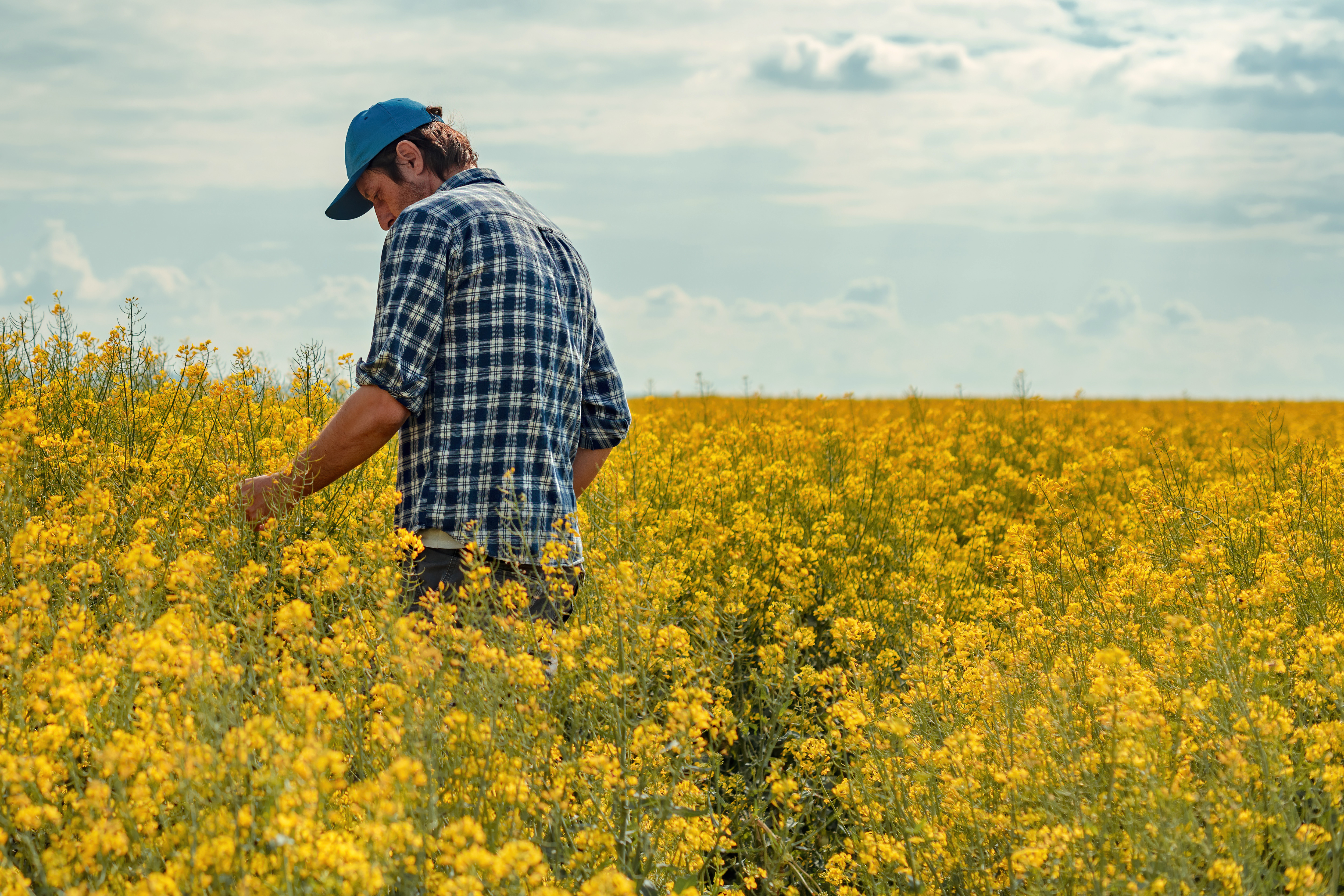
Farmer inspecting canola crop — Pixal 3D field operations
Deployable across Canada's Prairie provinces and scalable to 93.6M Canadian farmland acres.
Detects disease at the pre-symptom stage — before visible damage or yield loss begins.
Pre-symptomDetection stage
680 spectral bands captured per flight across 400–1700nm — 227× more data than standard RGB imagery.
680Spectral bands / flight

Hyperspectral Imaging

Pixal 3D captures reflectance information across visible and short-wave infrared wavelengths, expanding the signal available for disease discrimination well beyond standard RGB or multispectral capture.

Visible Spectrum
400nm – 700nm
VISIBLE LIGHT
Hyperspectral Insights
400nm – 1700nm
SHORT-WAVE INFRARED (SWIR)
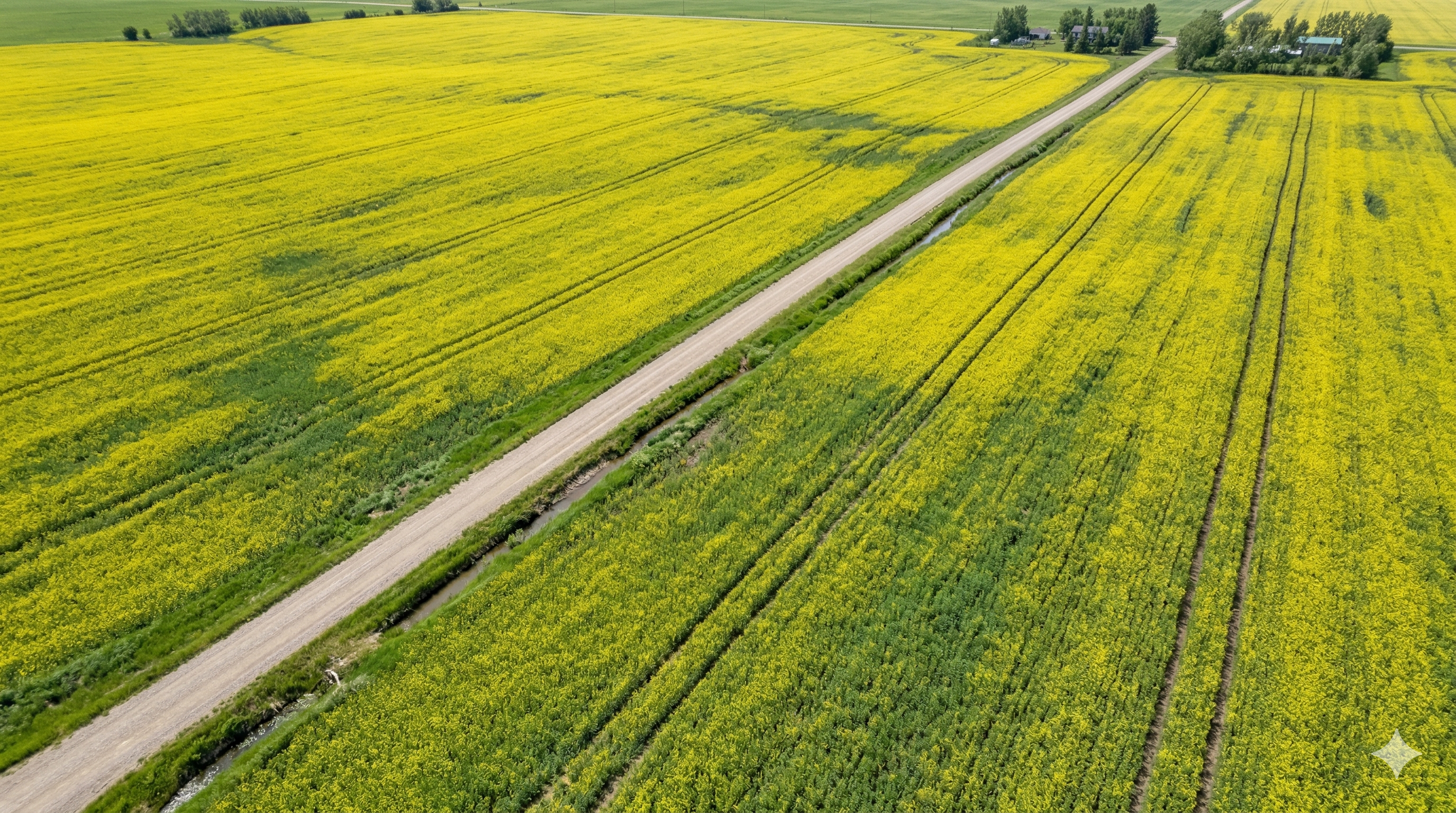
Healthy Crop (false coloring)
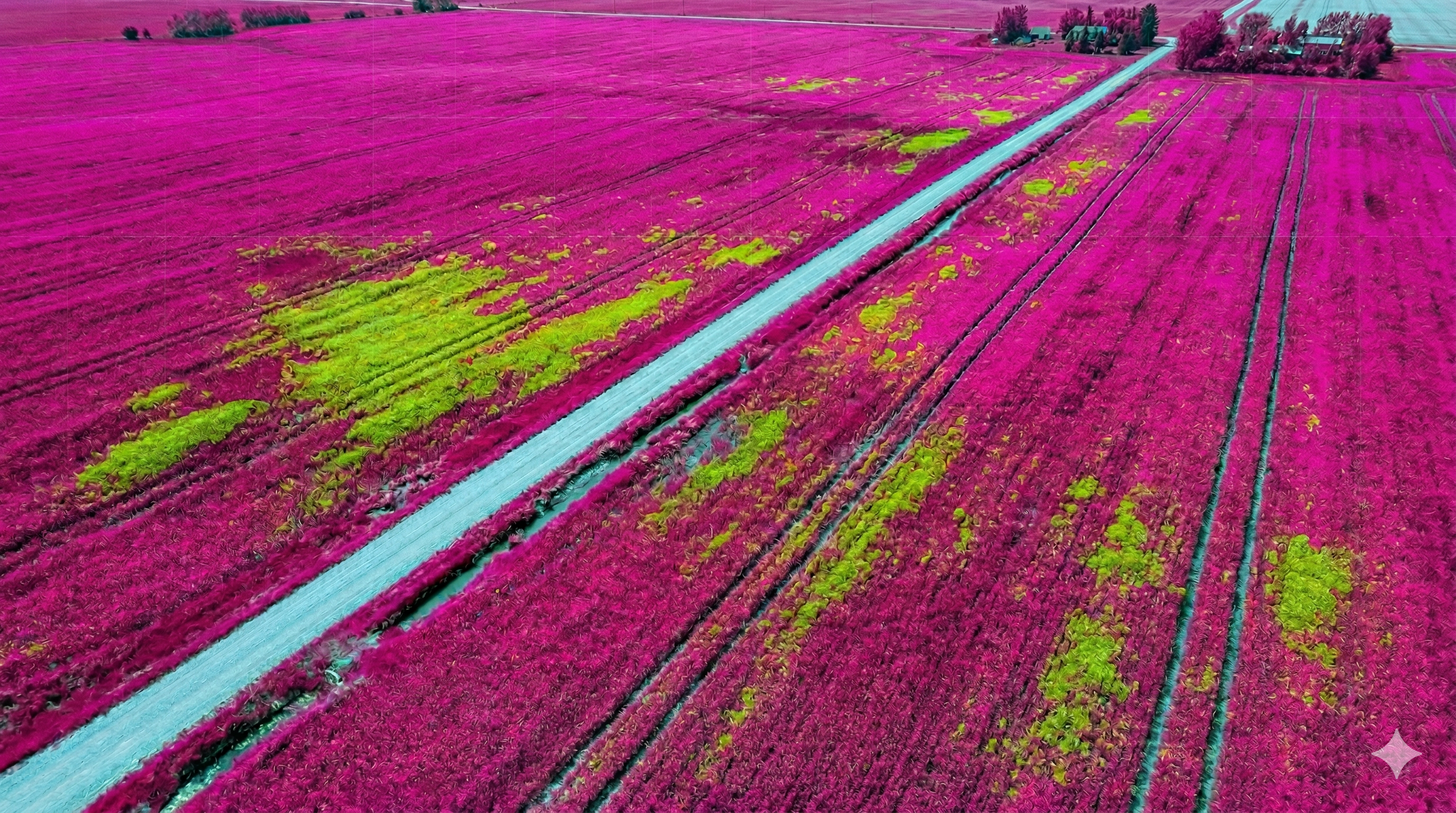
Clubroot Disease Detected (false coloring)
Canola field — human eye view
Canola field — Pixal 3D hyperspectral view Detected Clubroot Disease in Canola
DRAG
Hyperspectral Imaging + ML
Human Eye
03

The First Disease Specific
Aerial Diagnostic Platform

Pixal 3D is fundamentally different from existing remote-sensing companies. We don't just flag that a plant is stressed — we identify exactly why, at the pre-symptom stage.

Capability Category
Incumbents Remote-sensing competitors
Pixal 3D Hyperspectral UAV platform
01 / 03 Diagnostic Depth What the platform can actually tell a grower about the crop.
Detects stress only

Flags that a plant is stressed — never why.

Competitor products surface generalized stress indices from multispectral imagery, without the spectral resolution to separate drought, nutrient, or disease causes.

~5Bands captured
GenericDisease-specific diagnosis
Detects & Diagnoses

A.I. powered hyperspectral UAV that names the disease.

Sub-centimetre spectral visibility distinguishes abiotic vs. biotic stress factors and resolves specific pathogens at the pre-symptom stage.

680Bands captured
SpecificDisease-specific diagnosis
02 / 03 Detection Window When the platform catches the problem.
Reactive

Only flags disease once it's already spreading.

By the time visible stress appears on a competitor's NDVI map, yield damage has already begun and the treatment window is closing — leaving growers managing losses rather than preventing them.

Post-symptomDetection stage
Damage controlGrower response
Predictive

Diagnoses disease before visible symptoms emerge.

Sub-centimetre hyperspectral signatures capture the biochemical shifts that precede visible symptoms — opening a window for targeted, preventive intervention before yield loss begins.

Pre-symptomDetection stage
PreventionGrower response
03 / 03 Scientific Defensibility Whether growers, insurers, and regulators can trust the output.
Commercial heuristic

Vendor-claimed accuracy — no independent validation.

Competitor platforms rely on proprietary stress indices. None publish peer-reviewed disease-detection benchmarks because the underlying multispectral hardware cannot resolve individual pathogens.

Vendor claimsValidation
No capabilityClubroot detection
Peer-reviewed science

Published AAFC research validated in the field.

Our detection methodology is grounded in a peer-reviewed hyperspectral ML study co-authored with Agriculture & Agri-Food Canada and University of Guelph researchers — the foundational science competitors don't have.

Published studyValidation
100%Clubroot detection
Benchmark · Pixal 3D vs. Generalist Remote Sensing SaaS · Canadian Prairie, 2025 Source: Pixal 3D technical brief
Detection
Sclertonia Stem Rot Detected On 164 Acres of Canola
At $750/acre this represents a potential loss of $123,000
Treatment Plan
Apply fungicide to affected areas
Treatment Cost / acre $42.00
Affected area 164 acres
Total Cost: $6,888.00
Economics
Return on Diagnosis
Crop Resale Value $123,000
Treatment Cost $6,888
Value of Harvest Saved $116,112
"

Approximately 20% of farmers have reported trying satellite based imagery, many farmers feel that the benefits are often framed in abstract terms rather than concrete, relatable financial metrics— thereby reducing adoption.

"
Canadian Agrifood Policy Institute
The Pixal 3D Advantage

This is the Pixal 3D Difference

Our diagnostic capabilities allow us to do something unique. Because we know exactly what needs to be applied and where, we are able to breakdown the unit economics of every square meter of land. This means we can breakdown the potential harvest lost and cost of a treatment in plain english so producers know exactly what they stand to gain.

04

$250B Spent.
40% Still Lost.

The global agrochemical industry sprays and fertilizes more every year — and still loses up to 40% of the harvest to pests and disease. Blanket chemistry can’t fix a diagnostic problem. Pixal 3D is the precision layer that makes existing agricultural spend work. Sized below, TAM → SAM → SOM, with Canada as the launch market.

$250B Global Agrochemical Spend / yr Precedence Research · 2025
40% Global Crop Loss to Pests & Disease FAO / IPPC
$102B Global Ag Drone Market by 2033 — 30%+ CAGR Grand View · 2025
93.6M Canadian Cropland Acres — Pixal 3D's Launch Market StatsCan AgriCensus · 2024
Tier
Figure
Definition
Underpinning Data
TAM 2033
$102B Total Addressable

Global agricultural drone & precision crop-management market by 2033, growing at 30%+ CAGR.

Underpinned by $220B in annual global plant disease losses and $250B in global agrochemical spend — inefficiency Pixal 3D converts into precision.

Global disease losses$220B
Agrochemical spend$250B
CAGR30%+
SAM 2035
$4.40B Serviceable Addressable

Canadian disease-scouting & precision-spraying service market once Pixal 3D's spectral library covers the country's major field crops — built on 93.6M acres of Canadian cropland across canola, wheat, barley, pulses & corn.

Inspection: 93.6M acres × $8/acre × 5 visits/season = $3.74B.   Precision spraying: 35% of acres × $20/acre = $655M.

Today-capable wedge: canola's ~22M library-validated acres yield a $1.03B near-term launch market. Each additional crop added to the library expands the SAM.

Inspection SAM$3.74B
Spraying SAM$655M
Canola wedge (today)$1.03B
SOM 2032
$14.96M Serviceable Obtainable

Pixal 3D financial-model projection for 2032: 128 ASB contracts at $75K + 400K farmer acres + agrochemical commissions.

Alberta fully penetrated; Saskatchewan and U.S. entry underway.

ASB contracts128 × $75K
Farmer acres400K
ARR by 2032$14.96M
Source: Pixal 3D financial model · Grand View Research · Statistics Canada AgriCensus Updated: April 2026

Monetisation Strategy

Three compounding revenue engines, each activating in sequence

Near-Term 2026 – 2028
Channel 01 · Regional Agency
NWIPC Recurring Contract
$530K/yr · recurring · active
Pixal 3D's existing AI / ML contract with the Northwest Invasive Plant Council expands in 2027 to a $530K annual recurring engagement. A live government buyer carries the business through the pre-ASB revenue window and underwrites the 2027 revenue year independent of the ASB pipeline.
Channel 02 · Municipal
Mandated ASB Buyer
69 ASBs × $75K = $5.175M ceiling
Alberta's 69 Agricultural Service Boards are legally required to survey crop disease annually. Leduc County is the pilot — a legislated, recurring buyer. The pilot converts in 2026 and scales to 6 paid ASBs by 2028 (6 of 69, ~9% Alberta penetration), then doubles annually — 12 by 2029, 24 by 2030, tracking toward full-province saturation.
Channel 03 · Farmers
Seasonal Scouting Packages
3–5 visits/season · $8/acre/visit
On a typical 1,300-acre Alberta farm, a seasonal package generates $31K–$52K in annual contract revenue. Producers capture a 20% reduction in their ~$296K input spend — saving $59,200 per season — turning the service fee into a net financial gain from year one.
Medium-Term 2030 – 2033
Channel 04 · Agronomy
Agronomy Data Layer
$4/acre · multi-billion dollar industry
Agronomy service providers pay for access to Pixal 3D's diagnostic dataset to deliver more precise, field-specific recommendations to their farmer clients. A high-margin, zero-incremental-cost revenue stream that grows proportionally with the scouting base.
Long-Term 2034 +
Channel 05 · Agrochemicals
Wholesale & Retail Agrochemicals
$21B Canadian market · Pixal 3D directs the flow
With field-level diagnostic data at scale, Pixal 3D becomes a data-informed wholesale buyer of the agrochemicals it prescribes. Canadian farmers spend more than $21B annually on inputs. Every Pixal 3D recommendation creates a purchase decision — the only question is whether the margin flows to a distributor, or back to Pixal 3D.

Revenue Trajectory

Pixal 3D Financial Model · CAD
$150K2026Current-year project revenue
$600K2027NWIPC expansion · $530K/yr
$980K2028NWIPC + 6 ASBs · $1M threshold crosses 2029
$3.74M203024 ASBs + farmer base
$14.96M2032$10M milestone ✓ U.S. entry
$37.3M2035Pan-Canadian + wholesale
$116.8M2039$100M milestone ✓

Source: Pixal 3D Financial Model. $75K ASB contracts, $8/acre/visit farmer pricing, agrochemical commission modelling.

05

De-Risked by Real Buyers,
Bolstered by Industry Endorsements

Pixal 3D already has the ingredients investors look for a category-creating ag-AI company: an active municipal and provincial deployment path, and an industry endorsement from Alberta Canola — The organizational body representing 14,000+ canola farmers across Alberta Growers

Leduc Canola Field
Municipal Crop Disease Surveillance
Leduc County, AB · 2026 – 2027

Leduc County Clubroot Detection Pilot

Integrated drone-based hyperspectral imaging into Leduc County's crop disease surveillance program — replacing manual field inspection with autonomous aerial diagnostics across large parts of the county's canola acreage. Given that clubroot surveillance is a mandated requirement for all Alberta Agricultural Services Boards we see Leduc County as a key partner that can help us scale our solution across the province to the other 68 ASBs. There are two key factors working in a favor, 1. Under the Agricultural Pests Act, Every County in Alberta has a mandate to surveil for clubroot — this creates a pool of mandated buyers 2. Pixal 3D's has the only drone based platform on the market that can detect clubroot at 10x the speed and 10x the accuracy of traditional ground-based surveys — this creates a natural technology moat

69 ASBs Addressable
$75K Avg Contract
100% Detection Rate
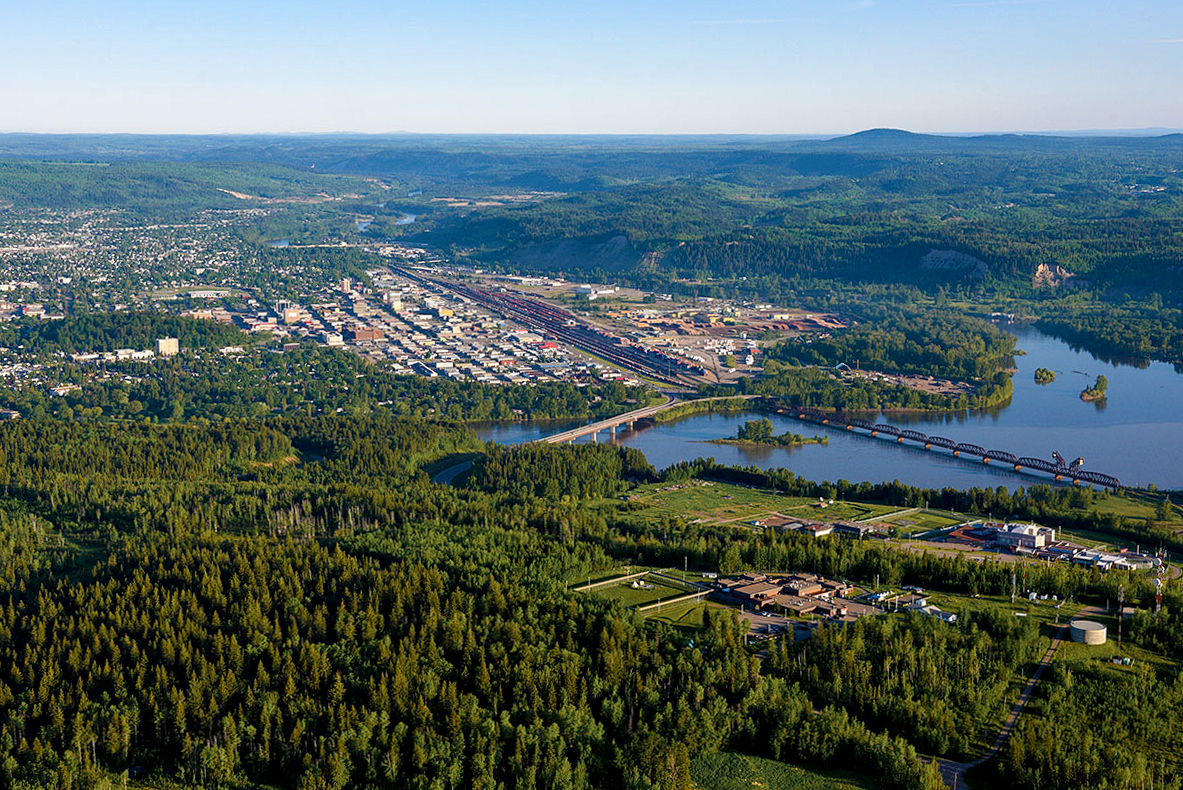
Prince George
Provincial Invasive Species Surveillance
British Columbia · May 2026 – October 2026

B.C. Invasive Weed Detection and Management

Pixal 3D won a contract with Northwest Invasive Plant Council (NWIPC) to use AI and ML to detect and track the spread of invasive weed species across BC. This will be the first time that AI and ML are used to detect and track the spread of invasive weed species across BC. Giving the province a much more detailed information on the spread of invasive weed species across BC. A succesul demonstration could lead to an expanded scope worth over $500K annually — further aligning with our strategy to capture repeatable revenue streams from government contracts.

633,953m² area inspected/span>
$133K Project Value
$530K Potential Annual Contract Value
Amrize Exshaw
Reputable Clients
Exshaw, Alberta · May 2026

Amrize Environmental Assessment

Amrize, formerly LaFarge— contracted WSP to condct an enviromental assessment of parts of the quarry. This assessment required the classification of trees across the site to count and distinguish between conniferous and deciduous trees. Pixal 3D was contracted to provide the data capture and and processing capabilities to deliver on this project

Top 5 Engineering Consulting Firm Addressable
$7k Project Value/span>
500+ ha Area Surveyed
06

Operationally Driven,
Backed by Top Researchers

Pixal 3D's founding team combines business development, drone operations, and machine learning — supported by one of the strongest agricultural research networks assembled for a Canadian agtech startup.

Founders

Stephane Trazo
Stephane Trazo
Founder · Director of Business Development
Pixal 3D Inc.
BSc Geology; Post-Graduate Certification in Data Science & Machine Learning. Leads commercial strategy, investor relations, and works directly with the ML team on model refinement. Drives partnerships with municipalities, Alberta Innovates, and CAAIN.
Roosevelt Quiah
Roosevelt Quiah
Director of Operations
Pixal 3D Inc.
Over a decade of expertise in UAV operations, geomatics, and land surveying. Specialises in LiDAR, RGB, and thermal imaging. Ensures all hyperspectral flights are executed with RTK precision and correct geo-referencing — the operational backbone of data quality.

Core R&D Team

Tolu Akindele
Tolu Akindele
Senior Developer
Pixal 3D Inc.
BSc Computer Science, University of Alberta. Builds and deploys ML infrastructure and scalable software powering Pixal 3D's aerial intelligence pipeline.
Tolu Oliya
Tolu Oliya
Senior Data Scientist
Pixal 3D Inc.
MSc Mathematics. Leads model development and analytics. Transforms raw hyperspectral datacubes into precision disease maps through statistical modelling and ML.
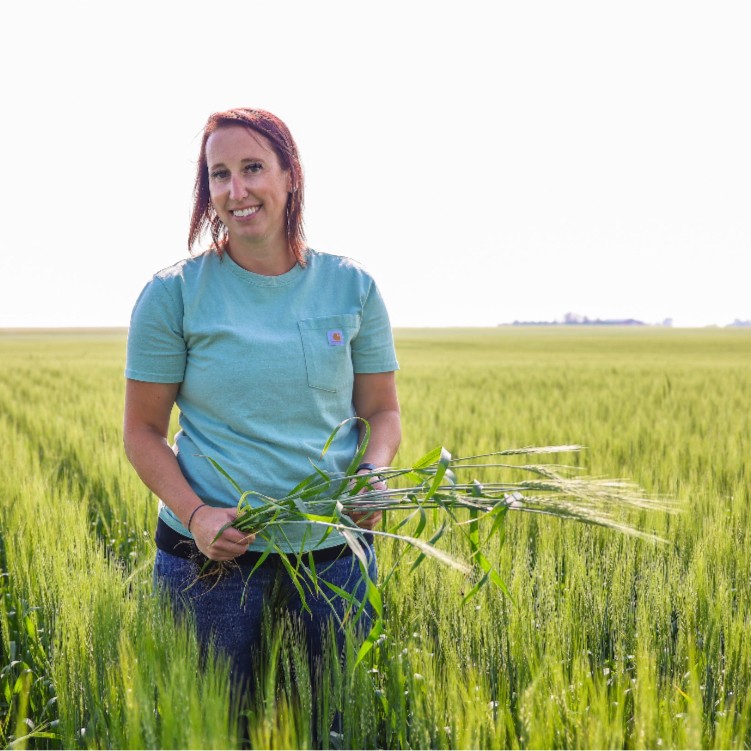
Christina Kaye
Christina Kaye
Project Lead, Smart Ag R&D
Olds College of Agriculture & Technology
Crop research and disease distribution analysis. Leads all field scouting and ground-truth data collection for model training and validation.
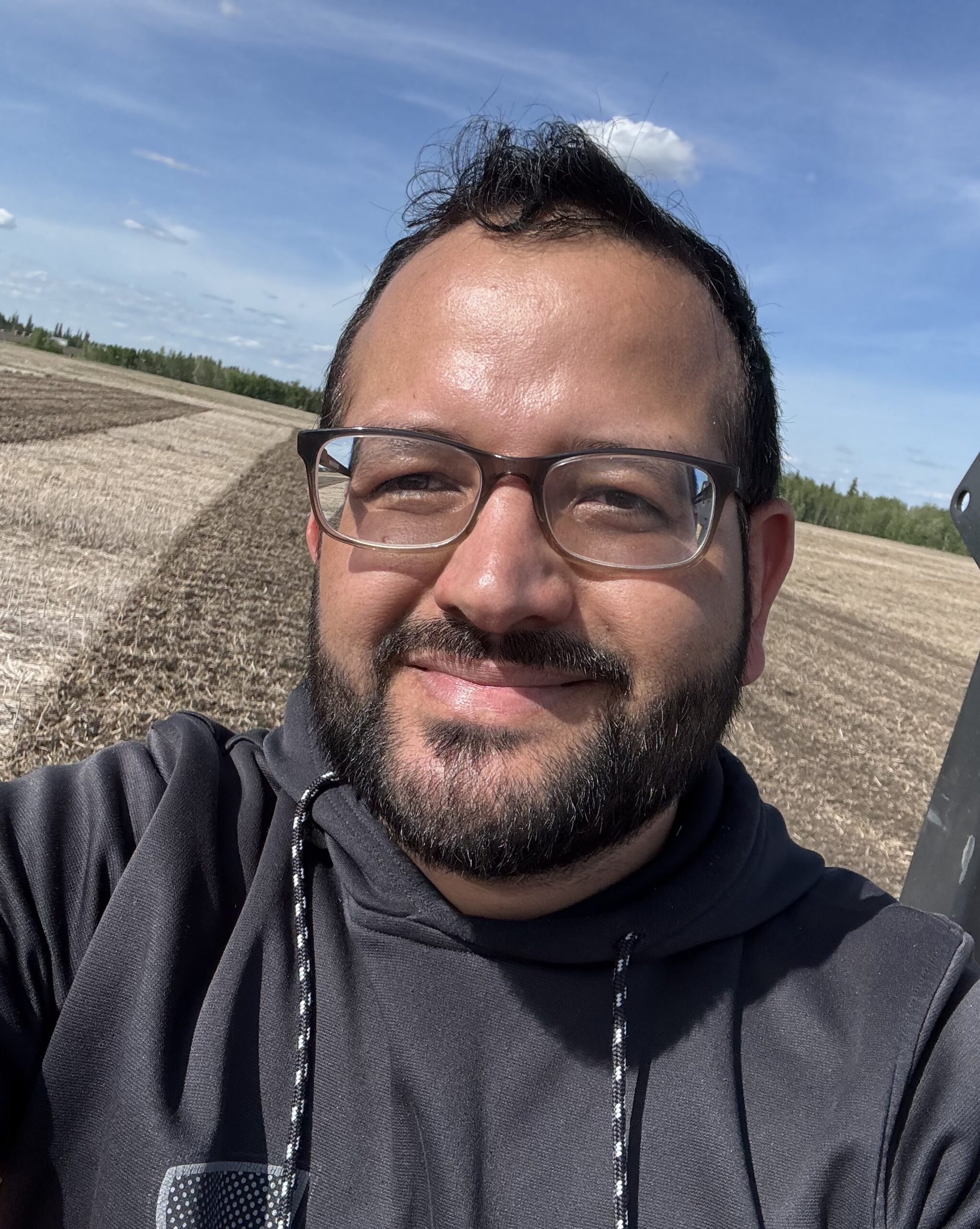
Kabal Singh Bohler
Kabal Singh Bohler
Research Manager
Gateway Research Organization
Professional Agrologist (P.Ag.) with extensive crop research experience. Leads canola small plot inoculation trials and brings resilience and data-driven rigour to agricultural productivity work.
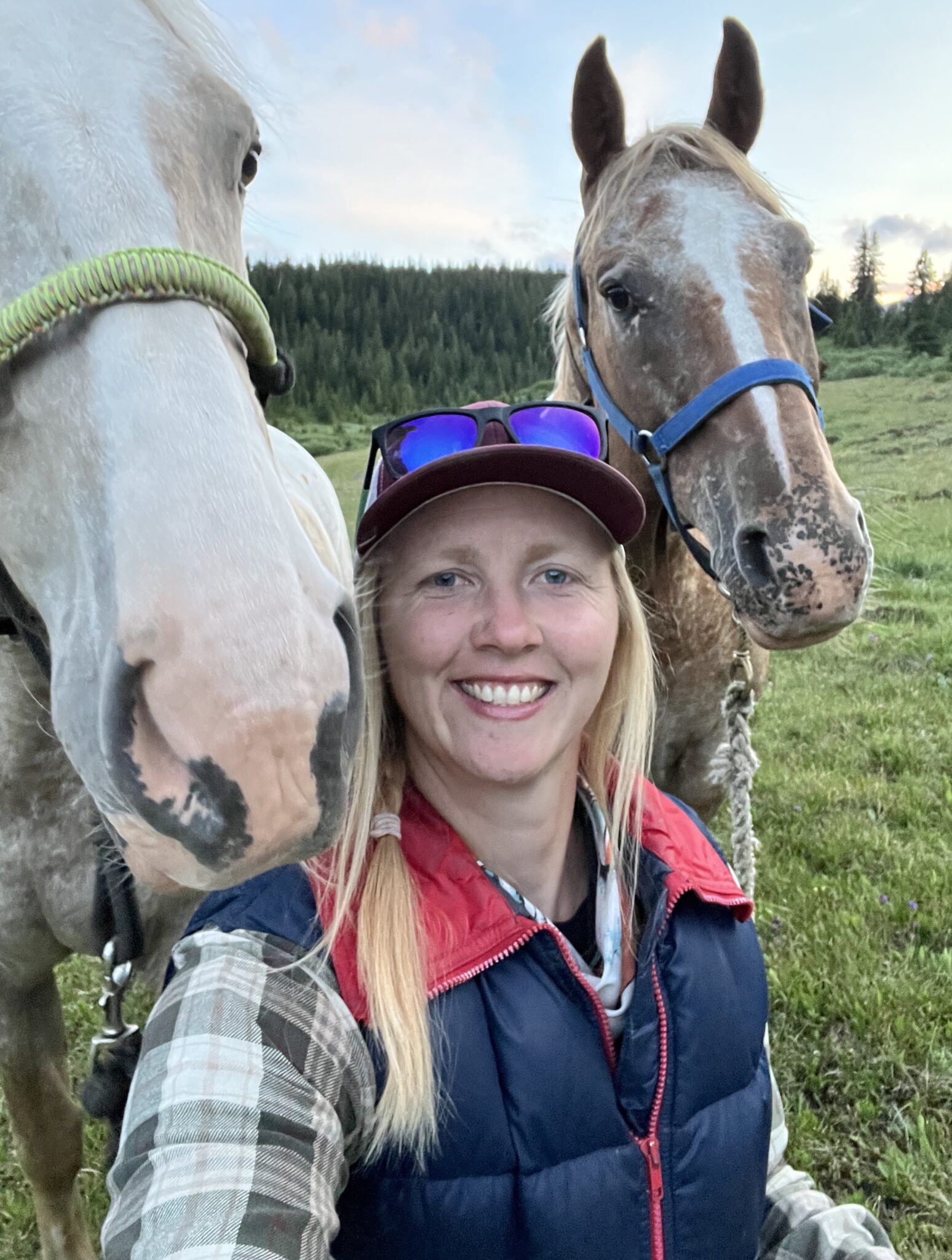
Andrea Carlyon
Andrea Carlyon
Manager
Gateway Research Organization
BSc Animal Science, University of Alberta. Built her career with Corteva Agriscience managing canola and corn research plots. As GRO Manager she leverages her network for field access and project extension.

Scientific Advisory Committee

Dr. David A. Halstead
Research Chair — School of Natural Resources & Built Environment
Saskatchewan Polytechnic
M.Sc.; Professional Biologist (P.Biol.). Appointed Research Chair in 2014 following 20 years teaching aquatic sciences and supervising applied student research. Expertise spans aquatic biology, landscape ecology, and remote sensing across LiDAR, multispectral, hyperspectral, thermal, and RGB platforms. Leads the Prince Albert applied-research program for forestry, agriculture, and land reclamation. Co-author of the foundational hyperspectral clubroot detection study.
Dr. Mary Ruth McDonald
Full Professor & Research Program Director, Muck Crops Research Station
University of Guelph — Department of Plant Agriculture
Ph.D. Plant Pathology, University of Guelph. Recipient of the Canadian Phytopathological Society's Outstanding Research Award (2021). Internationally recognised expert on clubroot of canola and brassica crops, integrated pest management, and diseases of onion and carrot. Co-author of the groundbreaking drone-based hyperspectral ML clubroot study that forms the scientific foundation of Pixal 3D's platform.
Dr. Bruce D. Gossen
Dr. Bruce D. Gossen
Fellow, Canadian Phytopathological Society
Agriculture & Agri-Food Canada (Retired)
Ph.D. Plant Pathology, University of Saskatchewan. 40-year Research Scientist at AAFC Saskatoon (1984–2023); Fellow and past President of the Canadian Phytopathological Society (CPS), and recipient of CPS's Outstanding Research Award. 220+ peer-reviewed papers, 3 books, and 30 book chapters. Lead editor of Diseases of Field Crops in Canada (4th ed., 2024). Co-author of the hyperspectral ML clubroot study.
Dr. Kelly Turkington
Research Scientist IV — Cereal & Oilseed Pathology
Agriculture & Agri-Food Canada — Lacombe Research & Development Centre
35+ years of cereal and oilseed disease research with AAFC Lacombe. Leads national collaborative programs on disease resistance breeding, cropping-system impacts, surveillance, and integrated disease management — working with AAFC Brandon, the University of Saskatchewan, and Alberta Agriculture. Foundational in establishing the Prairie Crop Disease Monitoring Network (PCDMN).
Herman Simons
Herman Simons
Manager — Smart Agriculture Applied Research
Olds College Centre for Innovation (OCCI)
25+ years owning and operating his own farm before joining OCCI, plus leadership roles representing producers at provincial and national levels and as a farm-management consultant. Now leads OCCI's evaluation, demonstration, and validation of agricultural technologies — with a focus on broadacre dryland farming in Alberta soil and climate conditions. Brings the producer's lens to Pixal 3D's commercialisation pathway and field-trial infrastructure.
07

A $1.58M seed — two seasons,
one path to Series A.

Most seed decks ask investors to price scientific risk, commercial risk, and team risk at once. Pixal 3D has already retired two: peer-reviewed detection co-developed with AAFC and the University of Guelph, and a national advisory board representing 200+ peer-reviewed publications. $1.58M funds the third — two seasons of paid commercial flights through Alberta Services Boards and the NWIPC, on a capital-efficient path to Series A.

Pixal 3D · Seed Round · 2026

Raising $1.58M on a $8M
post-money SAFE.

Round size $1.58M SAFE · MFN · 18% discount
Validated Sask Polytechnic × Guelph Peer-reviewed co-research · 2 seasons
Instrument SAFE post-money · MFN · 18% discount
Valuation cap $8.0M post-money
Non-Dilutive Portion $590K Grant & Challenge Capital · non-dilutive sources
Min. cheque $25K angels · $100K funds (pro-rata)
Runway 24 mo to Series A criteria
Target close Jun 30 2026 rolling · first tranche open
Use of funds Allocation · $1.58M
01 Team — agronomy, engineering, pilotsAgronomist, senior developer, 2× data scientists, geomatics / lead UAV pilot, operating space — 24 mo $1.026M 65%
02 Hardware — sensor & UAV fleet2× DJI Matrice 400 platforms, 2× FigSpec FS-64-C hyperspectral cameras (400–1700nm), batteries, field vehicle $224K 14%
03 Research partnershipsOlds College 3,000-acre smart-farm access + Gateway Research Organization agronomy network $166K 11%
04 Cloud & consumablesAWS training + inference compute, Innotech clubroot inoculum for ground-truth plots $88K 6%
05 Reserve & contingency5% contingency per cost model $75K 5%
Σ Total raise $1.58M 100%
Value unlocked by your investment 24-month targets
6 / 69 ASB customers by 2028 From the Leduc County pilot to 6 of Alberta's 69 municipal Agricultural Service Boards under paid contract by end of 2028 — the entry cohort for a customer base that doubles annually toward full-province penetration by 2032.
$980K 2028 revenue run-rate NWIPC recurring ($530K) + the first ASB cohort of 6 at $75K. The $1M threshold crosses in 2029 as the ASB cohort doubles to 12 ($1.43M) — a Series A qualification data point, carried by a mandated, recurring government buyer base.
5+ Pathogens in the proprietary library Two seasons of hyperspectral flights expand the diagnostic moat beyond clubroot into sclerotinia, fusarium head blight, verticillium stripe, and other pathogens of economic significance. Each flight compounds a labeled spectral corpus competitors cannot replicate — the library becomes the product.
Why now
01 Hardware crossed the commercial price line SWIR hyperspectral sensors have dropped below $100K. FS-64-C at $74K × 2 units is this round's smallest hardware line — not the blocker it was five years ago.
02 Disease pressure is accelerating in the launch market Clubroot confirmed in 42+ Alberta municipalities. Sclerotinia symptomatic in >90% of surveyed canola fields. The diagnostic gap widens every season.
03 Policy and commercial pull align Sustainable CAP and Alberta Innovates' A4A program are funding precision-ag adoption. Agrochemical partners under margin pressure now need disease-specific data to defend spray programs.
04 ML inference is productizable, not research-grade What required a research team in 2020 is a production inference stack in 2026. Pixal 3D ships in-season disease maps on deadline — not papers.
SAFE documents on file · post-money template · Alberta securities exemption Close: rolling through June 30, 2026
Get In Touch

Ready to Learn More?

Pixal 3D is building Canada's first agricultural AI diagnostic moat. We're actively in conversation with mission-aligned co-investors to close our seed round.

Lead Contact
Roosevelt Quiah
Phone
Website
Location
Calgary, Alberta